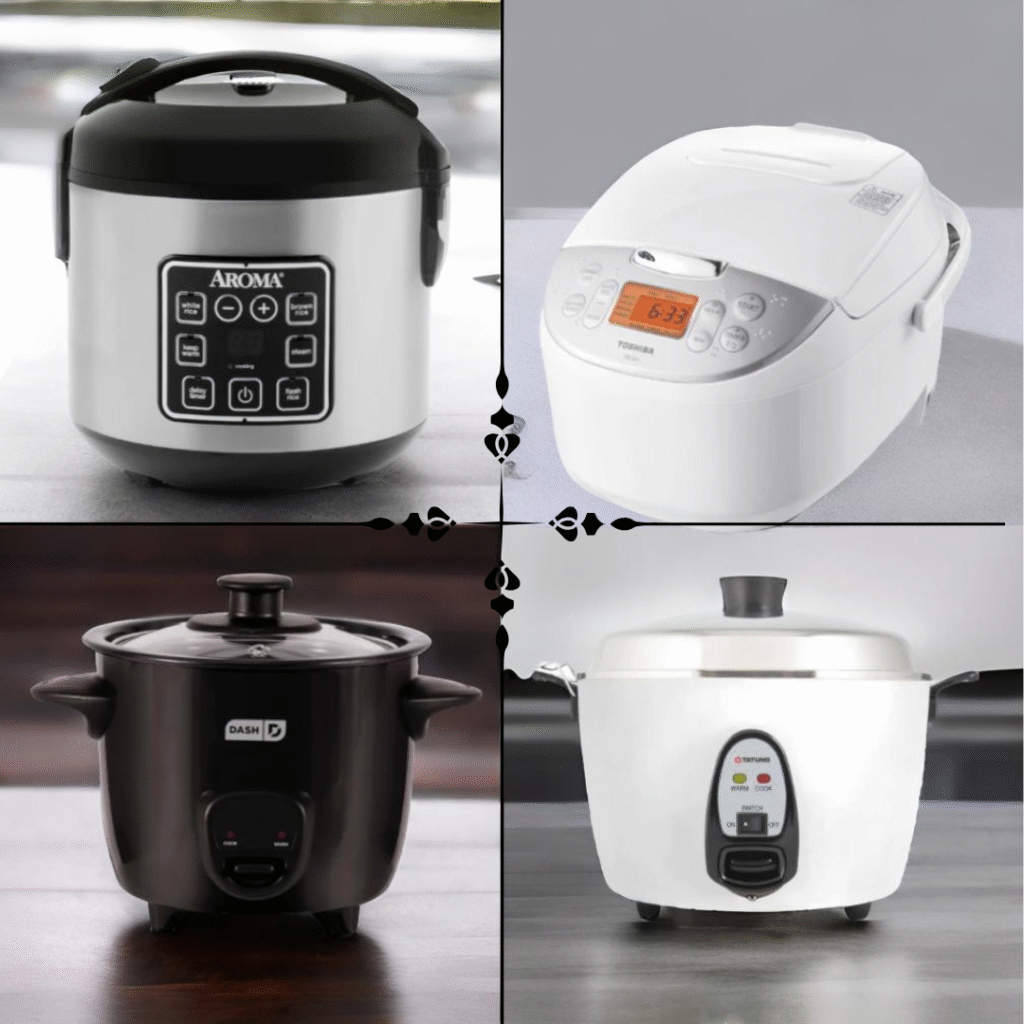
Cooking perfect rice at home is so much easier with a reliable rice cooker. No more scorched pots or mushy grains – just fluffy, restaurant-quality rice at the push of a button. In this comprehensive review, we’ll explore four standout models: an Aroma rice cooker, a fuzzy logic Toshiba rice cooker, a compact mini rice cooker, and the durable Tatung rice cooker. We’ll dive into detailed overviews, pros and cons, user experiences, cooking how-to guides, and cleaning tips for each. By the end, you’ll know exactly which cooker is best suited for your kitchen and cooking style. Let’s get started!
Aroma Digital Rice Cooker (ARC Series) – Overview & Review
The Aroma Digital Rice Cooker is a versatile, budget-friendly multicooker from Aroma Housewares, known for affordable, feature-packed appliances for 40+ years. This digital model handles basic white rice to whole grains and also works as a steamer and slow cooker. With 10-cup uncooked (20-cup cooked) capacity, it suits families and batch cooking. Programmable digital controls include settings for white and brown rice, plus a “Flash Rice” function that cuts white rice time by up to 50%. A 15-hour delay timer lets you load it in the morning and have fresh rice by dinnertime.
Inside the box: nonstick inner pot, rice measuring cup, steam tray, and spatula—all dishwasher-safe. The inner pot’s nonstick coating minimizes sticking (use the plastic spatula or a silicone spoon). A tight-fitting lid with automatic Keep Warm keeps rice warm and fluffy for hours. Some models add a condensation collector to trap excess steam water and cool-touch handles. Overall, the Aroma digital cooker aims to be an all-in-one rice/grain cooker that’s simple to use yet highly flexible for various recipes.
Pros of the Aroma Rice Cooker
- Multi-Function Flexibility: Cooks white rice, brown rice, sushi rice, quinoa, oatmeal, and more with one-touch presets. It can even slow-cook soups or stews and steam veggies or meat simultaneously using the included tray.
- Large Capacity, Family-Friendly: Makes up to 20 cups of cooked rice per batch – great for meal prep, big families, or dinner parties. Automatic Keep Warm kicks in after cooking, keeping rice serving-ready for hours without overcooking.
- Easy to Use: Intuitive digital controls and labeled presets take the guesswork out of cooking different rice types. Just add rice and water, press the corresponding menu button (White Rice, Brown Rice, etc.), and let it work. The cooker will automatically adjust time and temperature for perfect results.
- Delayed Start & Meal Planning: With the built-in 15-hour delay timer, you can load ingredients in the morning and have fresh rice (or even a complete one-pot meal) ready when you get home.
- Affordable & Feature-Packed: Despite its capabilities, the Aroma digital cooker is very budget-friendly (typically around $40–$60 range). You get a ton of features – multiple cooking modes, timer, steaming, slow-cook – at a fraction of the price of high-end rice cookers.
Cons of the Aroma Rice Cooker
- Longer Cooking Times: It may take longer than high-end models, especially when cooking large amounts of rice.
- Plastic Exterior: While the design is functional, it’s made from plastic, which may not appeal to those looking for a more premium appearance.
User Experience and Feedback
Overall, owners of the Aroma digital rice cooker are pleasantly surprised by how much it can do for the price. Many reviewers note that it consistently cooks fluffy white rice with zero hassle, freeing them from stovetop monitoring. Users love the convenience of tossing in rice, water, and maybe some seasoning, then hitting a button and walking away – “perfect rice every time without even thinking about it” is a common theme.
The included steam tray gets praise for enabling one-pot meals (for example, steaming fish or veggies above the rice). Busy parents and meal preppers appreciate the delay timer: you can set it up before work and come home to hot rice ready to serve. The versatility doesn’t go unnoticed either – people have successfully made jambalaya, chili, quinoa, and even cake in this cooker. It essentially replaces several gadgets (slow cooker, steamer, etc.), which is remarkable at this price.
Who Is the Aroma Rice Cooker Best For?
The Aroma digital rice cooker is best suited for families, couples, or individuals who want an easy, foolproof way to cook rice and more without breaking the bank. Its large capacity and multi-function design make it ideal for:
- Busy families – Cook big batches of rice or one-pot meals; use the delay timer so dinner is ready when you walk in the door.
- Meal preppers – Make lunches or multiple days’ worth of rice/grains at once. The Keep Warm ensures your rice stays fresh if you’re serving later.
- Home cooks on a budget – You get many features of high-end cookers (digital controls, timer, steaming) at a fraction of the cost.
- Small kitchens – Instead of needing a separate slow cooker, steamer, and rice cooker, this one unit does it all, saving counter space.
However, if you’re an absolute rice perfectionist looking for top-of-the-line precision (or you frequently cook specialty rice like basmati, sushi rice, etc. to exacting standards), you might eventually crave an upgrade with fuzzy logic or induction heating. For most everyday purposes, though, the Aroma hits the sweet spot of price, capacity, and capability.
Cooking Rice with the Aroma – How-To Guide
- Preparation: Rinse your rice to remove excess starch. Add the right water-to-rice ratio (typically 1:1.5 for white rice).
- Cooking: Press the “Cook” button and let the rice cooker do its work.
- Post-Cooking: After the cooking cycle completes, let the rice sit for 5-10 minutes before serving to achieve the best texture.
Cleaning and Maintenance Tips
- Inner Pot: Hand wash the cooking pot with warm water and mild soap to maintain its non-stick coating.
- Exterior: Wipe the outside with a damp cloth to prevent dust and stains from accumulating.

- Easy-to-use programmable digital controls complete with an automatic Keep Warm mode after each cycle
- An array of preset functions for every kind of meal: White Rice, Brown Rice, Steam, Flash Rice
- Steam meat, vegetables and more with the provided Steam Tray all while rice cooks below
- Perfectly prepares 2 to 8 cups of any variety of cooked rice or grains
Toshiba Rice Cooker (Fuzzy Logic 6-Cup) – Overview & Review
The Toshiba Rice Cooker combines advanced technology with user-friendly features. Its induction heating system ensures even cooking and perfect results every time. This is a high-tech option for those who want precision in their cooking.
Pros of the Toshiba Rice Cooker
- Induction Heating: Offers precise control of temperature, ensuring consistent results.
- Fuzzy Logic Technology: Adjusts cooking settings based on the rice type and cooking conditions for the best results.
- Keep Warm Function: Automatically switches to the “Keep Warm” mode to ensure your food stays at the perfect temperature.
- Versatile: Can cook a variety of rice types, soups, stews, and even cakes.
Cons of the Toshiba Rice Cooker
- Price: At a higher price point compared to basic models, it might not be ideal for those on a tight budget.
- Size: It’s a bit bulky, so it may take up more space than other smaller rice cookers.
User Experience and Feedback
The Toshiba rice cooker has garnered very positive reviews, especially from those who eat rice frequently and appreciate the upgrade in quality. Many users comment that the taste and texture of rice from this cooker is superior to what they used to get on the stovetop or with cheaper cookers – it’s fluffier and more evenly cooked throughout.
Who Is the Toshiba Rice Cooker Best For?
The Toshiba fuzzy logic rice cooker is best suited for small to medium households and rice enthusiasts who want consistent, high-quality results without venturing into premium-price territory.

- Multi-Function – This large rice cooker offers 7 cooking functions including: Mixed Rice, Quick Rice, Brown Rice, White …
- Highly Versatile – This big rice cooker with steamer basket is no simple rice cooker. It cooks different types of rice s…
- Fuzzy Logic Rice Cooker – Fuzzy logic technology allows this Japanese rice cooker to sense the moisture content of the r…
- Easy To Use – Sleek and stylish, this electric rice cooker 6 cup is designed with a user-friendly interface. The digital…
Dash Mini Rice Cooker (2-Cup) – Overview & Review
For those with limited kitchen space or smaller appetites, the Dash Mini Rice Cooker is a charming little gadget that punches above its weight. This mini rice cooker has a very small footprint (about the size of a coffee canister) and typically cooks 1 to 2 cups of rice at a time. With its 2-cup uncooked capacity (~3-4 cups cooked), it’s perfect for singles, dorm rooms, or couples who don’t need a big batch of rice.
Pros of the Dash Mini Rice Cooker
- Ultra-Compact & Portable: This cooker is downright tiny and lightweight. It won’t hog counter space and can easily be stored in a cabinet or even packed in a bag.
- Simple One-Touch Operation: There’s nothing complicated here – just a single switch to start cooking.
- Good Rice Quality (for Its Size): Don’t underestimate it – the Dash Mini actually cooks fluffy, well-cooked rice.
- Easy Cleanup: The inner pot and lid are dishwasher-safe.
Cons of the Dash Mini Rice Cooker
- Limited Capacity: Can only cook small batches, which may not be sufficient for larger groups.
- No Advanced Controls: You won’t find settings for brown rice or timers here. It’s a basic cooker that assumes standard white rice cooking.
User Experience and Feedback
Owners of the Dash Mini Rice Cooker often express a kind of affection for it – it’s commonly described as “cute and functional.” Many appreciate how it helps with portion control. The rice quality gets high marks considering the simplicity of the device.
Who Is the Dash Mini Best For?
The Dash Mini Rice Cooker is best suited for specific situations and users:
- Single folks or couples who typically cook just 1-2 servings of rice or grains at a time.
- College students or dorm life: It’s dorm-friendly and can cook simple meals in a small space.
- Office workers: Some people keep one at the office for hot lunches.

- Compact Yet Mighty: The Dash Mini Rice Cooker is your go-to single-serve Cooker for fluffy rice and healthy breakfasts w…
- Travel-Friendly Design: This portable Rice Cooker is a lightweight device with an easy-to-use interface, making it perfe…
- Consistent Cooking Results: Enjoy no overcooking with the indicator light and keep warm function, ensuring your rice sta…
- Effortless Cleanup: The PTFE-coated nonstick removable pot makes this compact Rice Cooker easy to clean; it also comes w…
Tatung Stainless Steel Rice Cooker (6-Cup) – Overview & Review
Last but certainly not least, let’s look at a classic: the Tatung Rice Cooker. Tatung is a Taiwanese brand with a near-legendary status among rice cooker enthusiasts – it’s known for its durability and unique cooking method.
Pros of the Tatung Rice Cooker
- Exceptional Durability: The Tatung is often considered an heirloom appliance.
- Even, Consistent Cooking (Indirect Heat): The double-boiler steaming method means the rice is heated gently and uniformly.
- No Nonstick Coating – Stainless Steel Pot: For those worried about Teflon or scratching coatings, Tatung is a dream.
- Multi-Purpose Use: The Tatung isn’t just a rice cooker; it’s effectively a steamer and warmer too.
Cons of the Tatung Rice Cooker
- Old-Fashioned Design (No Modern Features): The Tatung lacks advanced features like timers or fuzzy logic.
- Learning Curve for Water Measures: Cooking with a Tatung involves adding water to the outer pot in addition to the water inside with the rice.
User Experience and Feedback
Those who own Tatung rice cookers often become loyal fans for life. Users frequently comment on how perfectly the Tatung cooks rice – you get a consistent texture, and the flavor of the rice is excellent.
Who Is the Tatung Rice Cooker Best For?
The Tatung rice cooker is best suited for discerning home cooks who value longevity, simplicity, and excellent rice above all.

- Food grade 304 stainless steel inner pot (aluminum outer pot)
- Accessories Include: User Manual, Measuring Cup, Rice Spatula, Inner Pot Lid, and Steamer Plate
- Keep Warm On/Off Switch
- Made in Taiwan
Side-by-Side Comparison of Aroma, Toshiba, Dash Mini & Tatung
| Rice Cooker Model | Capacity (Uncooked) | Key Features | Approx. Price | Best For |
|---|---|---|---|---|
| Aroma Digital (ARC Series, e.g. 20-cup) | 10 cups (uncooked) – about 20 cups cooked | Multi-function: White/Brown rice modes, Steam, Flash Rice (quick cook), Slow Cook, 15-hr Delay Timer, Keep Warm. Includes steam tray for one-pot meals. Nonstick inner pot. | ~$50 (Budget-Friendly) | Families & versatility: Busy households wanting an affordable all-in-one rice cooker/multicooker. Great for batch cooking, steaming veggies, making soups/oatmeal, etc., on a budget. |
| Toshiba Fuzzy Logic (6-Cup, Model TRCS01) | 3 L (6 cups uncooked) – ~12 cups cooked | Microcomputer fuzzy logic for precise cooking. 7 presets (White, Brown, Mixed, Quick, Oatmeal/Porridge, etc.) plus Steam function. 3D heating for even cooking. Dual delay timers, auto Keep Warm up to 24 hrs. Nonstick inner pot, removable lid for cleaning. | ~$80–$100 (Mid-Range) | Rice enthusiasts & tech-savvy cooks: Those who eat rice often and value consistency. Great for trying different grains, needing timer functionality, and getting near high-end performance without high-end cost. Suitable for medium-sized families (2–5 people). |
| Dash Mini Rice Cooker (2-Cup Mini) | 1.5–2 cups uncooked – ~3-4 cups cooked | Ultra-compact one-touch cooker. Simple Cook/Warm switch. Cooks up to ~2 cups of rice quickly. Auto keep-warm (no timer). Nonstick removable pot and glass lid (both dishwasher safe). | ~$20–$25 (Low Cost) | Singles, dorms & travel: Perfect for students, solo dwellers, or couples with minimal space. Ideal for quick rice, oatmeal, or small one-pot meals. Also great for portability (office lunches, RVs). Not for large quantities – this is a personal-sized cooker. |
| Tatung Stainless Steel (6-Cup TAC-06KN) | 6 cups uncooked – ~12 cups cooked | Indirect heating (double-boiler) design for even cooking. One-touch operation with auto switch to Keep Warm (manual warm off switch). All stainless steel inner/outer pot – no nonstick. Steamer tray included for simultaneous steaming. Extremely durable (built to last decades). | ~$100 (Mid-High, but long-lasting) | Traditionalists & heavy users: Families and individuals seeking a reliable, long-term rice cooker/steamer. Great for those avoiding nonstick coatings. Suitable for cooking rice for 4-6 people routinely, and steaming foods. |
FAQs
Q1: What makes an Aroma rice cooker a good choice for beginners?
A1: An Aroma rice cooker is affordable and easy to use, with one-touch presets (white rice, brown rice, steaming) that remove guesswork. Automatic shut-off and keep-warm prevent burning or overcooking. Included accessories (measuring cup, paddle, steam tray) and clear manuals help first-timers. It’s a versatile, budget pick for learning grains.
Q2: How does the Toshiba rice cooker achieve better rice texture compared to a basic cooker?
A2: The Toshiba rice cooker uses fuzzy logic and 3D heating. A microchip tracks temperature and moisture, adjusting heat and time for ideal evaporation and fluffier grains. Heat surrounds the pot (bottom and sides) for even results—no crusty bottom. Basic on/off cookers just run until a thermostat flips, so texture is hit-or-miss.
Q3: Can a mini rice cooker really cook anything besides plain rice?
A3: Yes. A mini rice cooker can make oatmeal, porridge, quinoa, mac and cheese, steamed veggies, soups, even cakes—basically a small electric saucepan. Add enough liquid and stay within capacity; for longer cooks you may need to add water or switch it off manually. Great for quick one-pot meals, reheating, and dorm-friendly cooking.
Q4: Why do people say the Tatung rice cooker makes rice taste better?
A4: The Tatung’s cult following often mentions a difference in the rice’s texture and aroma. There are a couple of reasons for this perception. First, the indirect steaming method cooks rice very evenly and gently. This means each grain cooks at the same rate, which can enhance the overall texture – the rice is fully cooked but maintains a pleasant chew
without turning to mush. The Tatung method often shows a bit more moisture retention, keeping rice succulent. Because the inner pot is stainless steel with no coating, many feel the taste is “purer”—no nonstick layer to affect flavor or smell. Stainless steel doesn’t impart odor (cheaper aluminum can). Consistent heat can coax out natural sweetness. Many long-time Tatung users say it just tastes a bit better, likely from even cooking and the absence of scorching or chemical coatings. You rarely get a burnt crust, so all the rice is enjoyable. In short, Tatung’s design optimizes the cooking environment for rice, yielding notably excellent taste and texture.
Q5: Do I need to adjust water ratios for these different cookers (Aroma, Toshiba, mini, Tatung)?
A5: Generally, you’ll use the manufacturer’s instructions or markings for water ratios, as each cooker is calibrated a bit differently. Here are some pointers:
- Aroma: Use the included measuring cup and fill water to the line inside the pot that corresponds to the number of cups. Aroma’s markings already account for the type of rice (some models even have separate lines for white vs brown). A good rule: ~1.5 cups water per 1 cup of uncooked white rice. For brown rice, more like 1.75–2 cups water per cup of rice, or use the Brown Rice preset which typically adjusts cooking time instead of water. If you find the rice too firm, add a couple tablespoons more water next time; if too soft, use a bit less. Aroma’s Flash Rice (quick) uses the same ratio, just shorter time. If you prefer slightly firmer rice, use a touch less water.
- Toshiba: With fuzzy logic cookers like Toshiba, it’s designed to adapt, so following the water lines in the pot yields great results. Usually ~1.2–1.5 cups water per cup of white rice (again, they provide a marked inner pot). The Toshiba manual will detail exact ratios. It might have separate water measures for sushi rice vs jasmine, etc., but as a baseline, stick to their guidelines. For brown rice, use the Brown Rice line or roughly 2+ cups water per cup of brown rice.
- Dash Mini (Mini cookers): These often come with a small measuring cup (~2/3 of a standard cup) and have very tiny margin for error due to size. The Dash’s manual suggests ~1:1 ratio using their cup (so 1 mini-cup rice to 1 mini-cup water) which is about 2/3 cup water per 2/3 cup rice – that yields slightly firm rice. Many users prefer a tad more water: about 160 ml rice to 200 ml water (which is the 1:1.25 ratio we mentioned). A trick: if the mini’s markings are confusing, 1 full standard cup of water (240 ml) and 2 of the mini-cups of rice (which is ~1.25 standard cups rice) usually works for white rice. For 1 mini-cup rice, ~0.75 standard cup water is safe.
- Tatung: Tatung is unique – you measure water twice. The inner pot ratio is similar to stovetop: ~1.5 cups water per cup of rice for white, ~2 cups water per cup for brown. The outer pot water is measured by Tatung’s guide: often it’s “fill the provided cup with water for each cup of rice” to outer pot, which equates to maybe 1:1 outer water to rice in volume. Outer water doesn’t directly mix with rice, so it doesn’t end up in the rice; it just controls cook time. If your rice is coming out too hard in a Tatung, it usually means either the inner pot needed a bit more water or the cooking ended too soon (not enough outer water). For instance, brown rice might need you to add an extra half cup of water inside plus a bit more water outside to extend the steam time. The first few times, follow the manual’s table of measurements closely. Once you get the hang of it, it’s second nature – just be cautious not to overfill the outer pot.
In summary, each cooker has its recommended water ratio system—start there. If your rice is too wet or dry, tweak the water slightly. These cookers handle standard ratios well; small differences in rice brands or preference are easy to adjust once you know your cooker. Always use the included measuring cup for consistency (a rice-cooker “1 cup” is smaller than a US cup). Feel free to experiment—add a bit of oil or stock, accounting for the liquid. With use, the right ratio becomes intuitive for your preferred rice texture.
Final Thoughts: Choosing the right rice cooker comes down to your needs and lifestyle. The Aroma offers an unbeatable mix of features and value – perfect for families or anyone starting out. The Toshiba caters to those who want top-notch rice quality and more cooking options without going into luxury price territory. The Dash Mini proves that good things come in small packages, serving singles and students with convenience and speed. And the Tatung appeals to the traditionalist who values durability, simplicity, and a bit of nostalgia (with truly excellent rice as the result).
All four of these rice cookers can produce delicious rice; they just go about it in different ways. We hope this detailed comparison has given you clarity on which model fits your kitchen best. Here’s to perfectly cooked rice and hearty meals ahead! 🍚🎉